EPC Ratings & Energy Efficiency in Bristol Homes: A Complete Homeowner's Guide
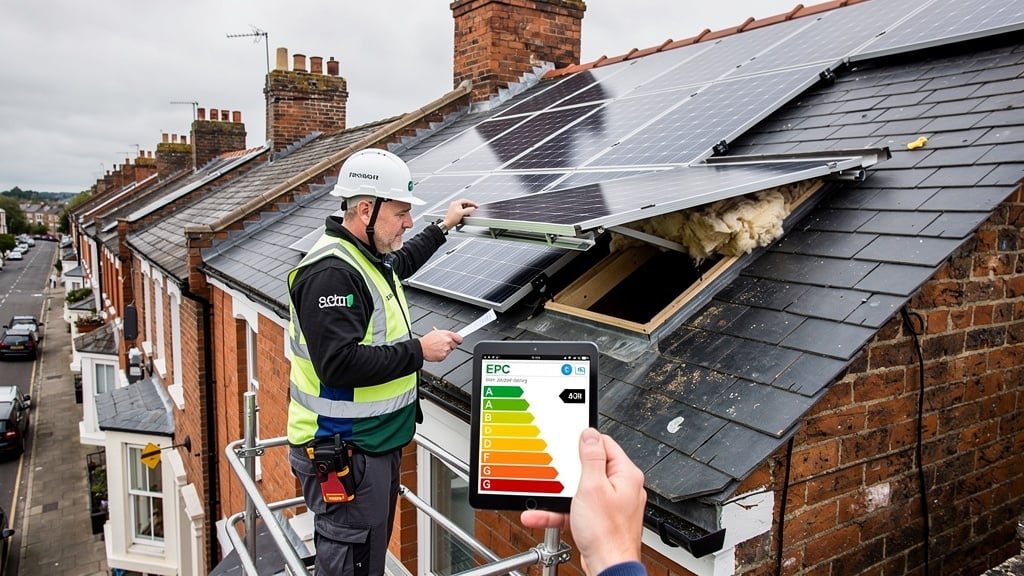
Energy Performance Certificates. You'll have seen them on every property listing — that colourful bar chart running from A to G, with a current rating and a potential rating. But how many homeowners genuinely understand what their EPC rating means, how it's calculated, or what they can realistically do to improve it?
For Bristol homeowners, this matters more than ever. Escalating energy bills, tightening regulations for landlords, and the increasing role of EPC ratings in property valuations have made energy efficiency a mainstream concern. Meanwhile, Bristol's predominantly older housing stock — full of Victorian terraces, Edwardian semis, and mid-century properties with solid walls and single-glazed windows — faces some of the most significant challenges in the country when it comes to energy performance.
In this guide, we explain exactly what an EPC is, what your rating actually means, the specific challenges facing Bristol properties, and — most practically — what improvements are worth considering and how to approach a retrofit project sensibly.
What Is an Energy Performance Certificate?
An Energy Performance Certificate (EPC) is a document that rates the energy efficiency of a building on a scale from A (most efficient) to G (least efficient). It's produced by a qualified Domestic Energy Assessor (DEA) following a visit to the property, and it must be obtained whenever a property is built, sold, or let.
The certificate includes two ratings:
- Current energy efficiency rating: The property's efficiency now, based on its current construction, insulation, heating system, windows, and other features.
- Potential energy efficiency rating: What the property could achieve if all the cost-effective improvements recommended in the EPC were implemented.
EPCs are valid for 10 years. You can check whether a property has a current EPC — and see its rating — on the government's free online EPC register at gov.uk/find-energy-certificate.
Understanding the EPC Bands
| Band | Score | Energy Efficiency | Typical Annual Energy Cost* |
|---|---|---|---|
| A | 92–100 | Excellent — very low energy use | ~£500–£700 |
| B | 81–91 | Very good | ~£700–£900 |
| C | 69–80 | Good — above average efficiency | ~£900–£1,200 |
| D | 55–68 | Average — most UK homes fall here | ~£1,200–£1,600 |
| E | 39–54 | Below average | ~£1,600–£2,200 |
| F | 21–38 | Poor — significant improvement needed | ~£2,200–£3,000+ |
| G | 1–20 | Very poor — very high energy use | ~£3,000–£5,000+ |
*Estimated annual energy cost ranges for a typical 3-bedroom Bristol terrace. Actual costs vary based on occupancy, usage, tariffs, and specific property characteristics.
Where Do Bristol Homes Typically Sit?
Bristol has a housing stock challenge. The city's most characterful — and most popular — residential areas are dominated by Victorian and Edwardian terraces built between 1850 and 1914. These properties were constructed with solid brick walls (no cavity for insulation), single or early double glazing, suspended timber floors over cold crawl spaces, and minimal roof insulation by modern standards.
The result is that a typical unimproved Bristol Victorian terrace will often rate at E or F on its EPC. This matters for several reasons:
- Running costs: An E or F-rated home costs significantly more to heat than a C-rated one — potentially £800–£1,500 more per year at current energy prices.
- Landlord regulations: The Minimum Energy Efficiency Standards (MEES) already require rental properties in England to have an EPC rating of at least E. Proposed future regulations may raise this minimum to C by 2030, with significant implications for Bristol's large private rental sector.
- Mortgage and saleability: Energy-efficient properties command a growing premium in the market. A D or E-rated property is becoming increasingly difficult to sell to buyers who are acutely aware of energy bills.
- Carbon footprint: Bristol has declared a climate emergency and has ambitious carbon reduction targets. Retrofitting its older housing stock is one of the most significant levers available.
The Solid Wall Challenge
The single biggest energy efficiency challenge for Bristol's Victorian housing stock is the solid brick wall. Unlike post-1920s cavity wall construction — which can be relatively easily insulated by injecting material into the cavity — solid walls require a fundamentally different approach.
There are two options for solid wall insulation:
External Wall Insulation (EWI)
Rigid insulation boards are fixed to the external face of the wall, then rendered or clad. This is highly effective — it can improve thermal performance dramatically and also protects the existing brickwork. However, it changes the external appearance of the building, requires planning permission in conservation areas or for listed buildings, and can cause complications at roof junctions, window reveals, and boundary walls. Cost: typically £8,000–£20,000 for a typical Bristol mid-terrace, depending on size and cladding choice.
Internal Wall Insulation (IWI)
Insulation boards or stud walls with insulation are fixed to the internal face of the external walls, then plastered. This preserves the external appearance but reduces the internal floor area slightly and requires all sockets, switches, and window reveals to be reworked. Cost: typically £5,000–£12,000.
Both approaches require careful detailing around thermal bridges and junctions to avoid creating condensation problems — this is where getting professional advice from a surveyor before committing to a retrofit scheme is genuinely important.
Planning Retrofit Works on Your Bristol Home?
Our surveyors can assess your property's current condition and advise on which improvement measures are appropriate — and which might cause problems if done incorrectly. Get in touch for a free discussion.
Talk to a SurveyorKey Energy Efficiency Improvements for Bristol Homes
Here are the main retrofit measures to consider for a Victorian Bristol property, with honest guidance on costs, likely impact, and important caveats:
🏠 Loft Insulation
For a property with a conventional loft space, adding or topping up loft insulation to 270mm depth is one of the most cost-effective energy improvements available. If the existing insulation is thin or absent, the impact on your EPC and running costs can be significant.
🪟 Window Upgrades
Replacing single-glazed sash windows with double or secondary glazing reduces heat loss and improves draught control. In conservation areas, secondary glazing (fitted inside the existing frame) is often the only approved option and can be very effective. Note: in conservation areas, any external window replacement requires planning permission and must use sympathetic designs.
🔥 Boiler and Heating System Upgrade
Replacing an old, inefficient boiler with a modern condensing combi boiler can significantly reduce gas consumption and improve your EPC rating. Upgrading the heating controls (adding a smart thermostat, TRVs on all radiators) amplifies the savings. This is typically one of the best-value retrofit measures for Bristol Victorian terraces.
☀️ Solar Photovoltaic (PV) Panels
Solar panels generate electricity from sunlight, reducing grid electricity consumption and potentially exporting surplus power back to the grid. They have a relatively short payback period at current electricity prices and significantly boost EPC scores — often moving a property from D to C. South-facing roofs in good condition are ideal. Check with a surveyor first that your roof structure is adequate to support the additional load.
💧 Floor Insulation
Many Bristol Victorian terraces have suspended timber ground floors over a ventilated void. Insulating between the floor joists from below (where accessible) or above (during refurbishment) can reduce draughts and heat loss significantly. This is often overlooked but can be highly cost-effective.
🌡️ Heat Pump (Air Source or Ground Source)
Heat pumps are an increasingly popular alternative to gas boilers for heating and hot water. They're highly efficient when running on renewable electricity and can dramatically improve EPC scores. However, for Victorian solid-wall properties in Bristol, they require careful assessment — they work best in well-insulated, lower heat-demand properties, and may need upgraded radiators or underfloor heating to operate efficiently. Don't install a heat pump before addressing insulation.
Retrofit Risks — What Can Go Wrong
This is where a surveyor's perspective is genuinely important. Energy improvement works are not inherently risk-free, and poorly planned or executed retrofit works on Bristol's older housing stock can cause significant problems.
Interstitial Condensation
When warm, moist air from inside the building meets a cold surface within the wall structure, condensation forms. In a solid Victorian wall, this happens at a predictable point. Adding insulation changes where that point is — and if the insulation specification is wrong, you can create conditions that lead to condensation within the wall, causing damp and timber decay. This is particularly relevant for internal wall insulation, where the detailing at junctions (floors, ceilings, window reveals) is critical.
Ventilation Problems
Victorian buildings "breathe" through gaps, cracks, and original ventilation features like air bricks and chimney flues. Sealing a property heavily without providing controlled ventilation leads to elevated humidity levels, condensation, and poor indoor air quality. Any significant retrofit project should include an assessment of ventilation strategy.
Moisture in Solid Walls
Solid brick walls that are already showing signs of moisture — either from penetrating damp or rising damp — should be investigated and treated before any insulation is applied. Trapping moisture within a wall system accelerates decay and can lead to structural problems.
This is why we consistently recommend that homeowners commission a building survey or at minimum a damp and structural inspection before embarking on a major retrofit programme. The cost of getting advice upfront is tiny compared to the cost of remedying problems caused by poorly specified retrofit works.
Grants and Financial Support Available in Bristol
Several financial support schemes are available for energy improvement works in Bristol:
- Great British Insulation Scheme: Government-funded insulation for homes rated D–G. Eligible households can receive free or heavily subsidised loft, cavity wall, or solid wall insulation. Check eligibility at gov.uk.
- Boiler Upgrade Scheme: Government grant of £7,500 towards the cost of an air source heat pump (£5,000 towards ground source) for eligible properties replacing fossil fuel boilers.
- Bristol City Council Retrofit Bristol Programme: Bristol City Council has active retrofit funding and advice programmes as part of its climate action commitments. Check the council website for current offers.
- ECO4 (Energy Company Obligation): Larger energy companies are obligated to fund energy improvements for low-income households. If you receive means-tested benefits, you may qualify for significant free works.
- Green Homes Finance: Several local authorities and community energy groups in the Bristol area offer green loans at preferential rates for energy improvement works.
How EPC Rating Affects Property Value in Bristol
Research consistently shows that energy-efficient properties command a premium in the UK housing market. For Bristol specifically:
- Properties rated C or above are increasingly preferred by buyers aware of energy running costs
- Landlords with E or F-rated properties face significant regulatory risk and potential capital expenditure requirements
- Green mortgages (offering lower interest rates for energy-efficient homes) are becoming more widely available, making EPC improvements financially advantageous
- As minimum EPC standards for rental properties are expected to tighten, F and G-rated properties face growing uncertainty over future lettability
When we include an EPC and energy efficiency assessment as part of a Level 3 Building Survey, it gives buyers a complete picture of both the condition and the running cost profile of the property they're considering.
Frequently Asked Questions
A Domestic Energy Assessor (DEA) visits the property and collects data on construction type, wall type, insulation levels, heating systems, windows, lighting, and other relevant features. This data is entered into government-approved software (SAP/RdSAP) which calculates the EPC rating. The visit typically takes 45–90 minutes, and the certificate is issued shortly afterwards. EPCs must be carried out by an accredited DEA.
Yes. If you believe your EPC rating is inaccurate — because the assessor incorrectly recorded features of your property — you can first raise this with the assessor directly, providing evidence (such as receipts for insulation works, building regulations certificates, or photographs). If unresolved, you can escalate to the assessor's accreditation scheme. It's worth noting that EPC ratings are based on the asset (the building), not how efficiently occupants use energy, so your actual bills being lower than expected isn't itself grounds for challenge.
Yes, but with constraints. Some improvements — such as loft insulation, upgraded boilers, secondary glazing, floor insulation, and roof solar panels (on non-prominent elevations) — can often be carried out without planning permission even in conservation areas. Others, such as external wall insulation, replacement windows, and some solar installations, require permitted development approval or full planning permission and must use sympathetic materials and designs. We can advise on what's feasible for your specific property.
It depends on the scale of the improvement and the cost involved. Low-cost measures like loft insulation top-up, draught-proofing, and smart heating controls can improve your EPC for modest outlay and make the property more attractive to buyers. Major works like solid wall insulation or heat pumps typically cost more than they add to the immediate sale value, though they may make the property more saleable and avoid downward price pressure from energy-conscious buyers. We'd recommend getting advice from both a surveyor and a local estate agent before committing.
Under current MEES regulations (Minimum Energy Efficiency Standards), all privately rented properties in England must have a minimum EPC rating of E. It is illegal to grant new tenancies or renew tenancies for properties with an F or G rating unless an exemption applies. Proposed future regulations would raise this minimum to C by 2030 for new tenancies, with all existing tenancies following by 2033 — though legislation has not yet been passed as of mid-2025. Landlords with lower-rated properties should take independent advice on the most cost-effective route to compliance.

Sarah Chen
Surveyor — Residential
Sarah is a residential surveyor and RICS registered valuer at Bristol Surveyors. She has surveyed hundreds of Bristol homes and works closely with homeowners planning improvements to ensure retrofit works are appropriate for their property's construction and condition.