Damp in Bristol Homes: How to Spot It, What It Means, and What to Do
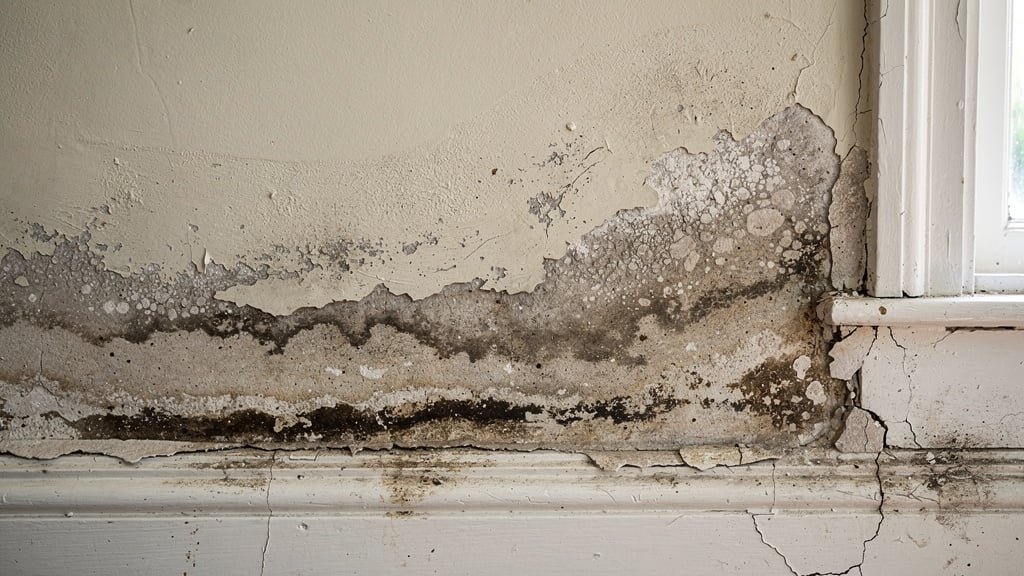
Few things alarm a property buyer more than the word "damp." And it's true that damp problems in a Bristol property can range from easily fixable to genuinely serious. But here's what we always tell our clients: panic is rarely the right response. Understanding what type of damp you're dealing with — and what causes it — is the crucial first step.
As Bristol surveyors who inspect hundreds of properties a year, we see damp in some form on most of the older homes we survey. Bristol's climate and its wealth of Victorian and Georgian properties create the perfect conditions for damp to develop. Here's what you need to know.
The Three Main Types of Damp in Bristol Properties
Rising Damp
Rising damp is caused by groundwater being drawn up through porous masonry by capillary action. It tends to affect walls at low level — typically the bottom 0.5 to 1 metre — and can be identified by:
- A damp "tide mark" on internal walls, often brown or yellowish
- Salts crystallising and staining the plaster surface
- Blistering paint and crumbling plaster at low level
- A musty smell, particularly in ground floor rooms
Rising damp in older Bristol properties is usually associated with a failed, absent, or bridged damp-proof course (DPC). Victorian properties either had no DPC at all, or were built with materials like slate or bitumen that can deteriorate over time.
Important note: Rising damp is frequently misdiagnosed. Many "damp companies" use electrical moisture meters to suggest walls are "wet" and then recommend expensive remedial injection treatments. In reality, many cases that appear to be rising damp are caused by penetrating damp or condensation, and the expensive treatment isn't needed. An independent survey from our team will give you an honest diagnosis — not one driven by a desire to sell you a remedy.
Penetrating Damp
Penetrating damp is exactly what it sounds like — water penetrating through the external fabric of the building. It's the most common form of damp in Bristol's period properties, and it almost always has an identifiable physical cause that can be repaired.
Common sources of penetrating damp include:
- Defective or missing pointing (the mortar between brickwork)
- Cracked or missing render on external walls
- Blocked or defective gutters and downpipes causing water overflow
- Defective flashings at roof abutments or chimney stacks
- Failed or absent window sills allowing water to drip behind cladding
- Inadequate roof coverings allowing water ingress
The good news: penetrating damp is generally the most straightforward type to fix, once the source is identified. Repoint the brickwork, fix the gutters, replace the flashings — and the damp stops.
Condensation
Condensation forms when warm, moisture-laden air comes into contact with a cold surface. It's the most common type of damp in modern well-insulated properties, and it's becoming more prevalent in older properties too as people insulate and draught-proof them without adequate ventilation.
Condensation typically appears as:
- Black mould on cold surfaces — window reveals, behind furniture, in corners
- Streaming windows in the morning
- Musty smell in bathrooms, kitchens, and poorly ventilated rooms
The solution is usually improved ventilation, better heating patterns, and — in some cases — added insulation. It's rarely expensive to address once properly diagnosed.
What Our Surveyors Look For
When we carry out a survey in Bristol — whether a Level 2 HomeBuyer Report or a Level 3 Building Survey — damp inspection is a core element. Our surveyors use electronic moisture meters to identify elevated moisture readings in walls and floors, and they combine this with a thorough visual inspection to determine the likely cause.
Crucially, we assess damp holistically. We look at the external fabric of the building — gutters, pointing, flashings, render — as well as the internal evidence. A moisture reading in a wall only tells part of the story; understanding why that moisture is there requires experience and judgment.
What Should You Do If Damp Is Found on Survey?
If our report identifies damp, the first step is to understand what type it is and what's causing it. We'll explain this clearly in your report. The appropriate next steps then depend on the type and severity:
- For minor penetrating damp from gutters or pointing: get quotes from builders for straightforward repairs, typically a few hundred pounds
- For more extensive penetrating damp: use the survey findings to renegotiate the purchase price or ask the vendor to fix it before completion
- For suspected rising damp: commission a specialist report from an independent (not commission-driven) damp specialist
- For condensation: discuss ventilation improvements with the vendor or factor them into your renovation plans
Concerned About Damp in a Bristol Property?
Our surveyors provide honest, independent assessments of damp in Bristol and South West properties. We'll tell you what's really causing the problem — and what it'll actually cost to fix.
Get a Free QuoteA Real-World Example
A client came to us recently, very worried about a Victorian terraced house in St George, Bristol. The vendor had disclosed some damp in the dining room, and my client was questioning whether to proceed.
We carried out a Level 3 Building Survey. The damp in the dining room was penetrating damp caused by two issues: a blocked downpipe causing water to cascade down the wall, and some failed pointing in the bay window below. Estimated repair cost: £350–£500 for a competent builder. Our client used the survey findings to get £2,000 knocked off the purchase price, paid £650 for the survey, and felt confident proceeding.
That's the whole point of a professional survey — turning the unknown into the known.
Frequently Asked Questions About Damp
Not always. Even genuine rising damp, while something that should be addressed, doesn't mean a property is uninhabitable or unsaleable. The key questions are: how widespread is it, what's causing it, and what will it cost to fix? Our surveyors will answer all three clearly.
Yes — damp findings on a survey are commonly used to negotiate a price reduction or to ask the seller to carry out repairs before exchange. The repair cost estimates in our survey reports are designed to help you have these conversations with confidence. See our article on renegotiating with a survey for more guidance.
Chemical DPC injection can be effective for genuine rising damp caused by a failed damp-proof course. However, it's frequently unnecessary and over-prescribed. Many damp companies profit from recommending injection treatments for problems that are actually caused by penetrating damp or condensation. We always recommend getting an independent survey diagnosis before committing to expensive remedial treatments.

Sarah Chen
Surveyor, Bristol Surveyors
Sarah specialises in residential surveys across Bristol and Bath. She has extensive experience diagnosing damp issues in Victorian and Edwardian properties.